
Door leaks often trace to detergent, loading, or gasket condition before any pump or tub repair.
A dishwasher that leaks from the door most often has a suds, seal, latch or leveling cause. Reduce detergent, wipe the door gasket and bottom edge, make sure the door latches fully and the lower rack is installed correctly, and check that the dishwasher sits level. If leaks continue after one controlled test, or water appears under the cabinet, book diagnosis.
Water showing up at the front of a KitchenAid dishwasher can throw off a normal day at home. A symptom by itself does not name a broken part, so begin with observations that are safe, repeatable, and helpful should you later schedule a repair visit.
What follows draws a line between everyday maintenance and jobs that call for testing equipment or taking the unit apart. Working around a lock, a safety switch or a displayed error so the appliance keeps running is never the answer. Jotting down what you see today gives a technician a faster, cleaner path to the cause.
Measure the detergent properly, make sure the door shuts all the way, and look along the bottom edge of the gasket for food debris or damage. Do the checking with the dishwasher in its usual spot and never force panels, fittings or controls. If a small change alters the result, run a single ordinary cycle before deciding what it means.
Too many suds, an item stopping the latch from closing, or a cup in the way of the door can send water out during the wash or rinse. Pay attention to when it happens: every cycle, only with one load or setting, or after the unit has run for some time. That detail tells you more than restarting it repeatedly. Note whether the leak begins early in the wash, when suds peak, or near the end, since the timing separates a suds issue from a seal issue.
| When it leaks | Likely cause | Safe check |
|---|---|---|
| During wash | Oversuds or load | Reduce detergent |
| At front bottom | Gasket debris | Wipe seal |
| Under cabinet | Hose or pump | Book diagnosis |
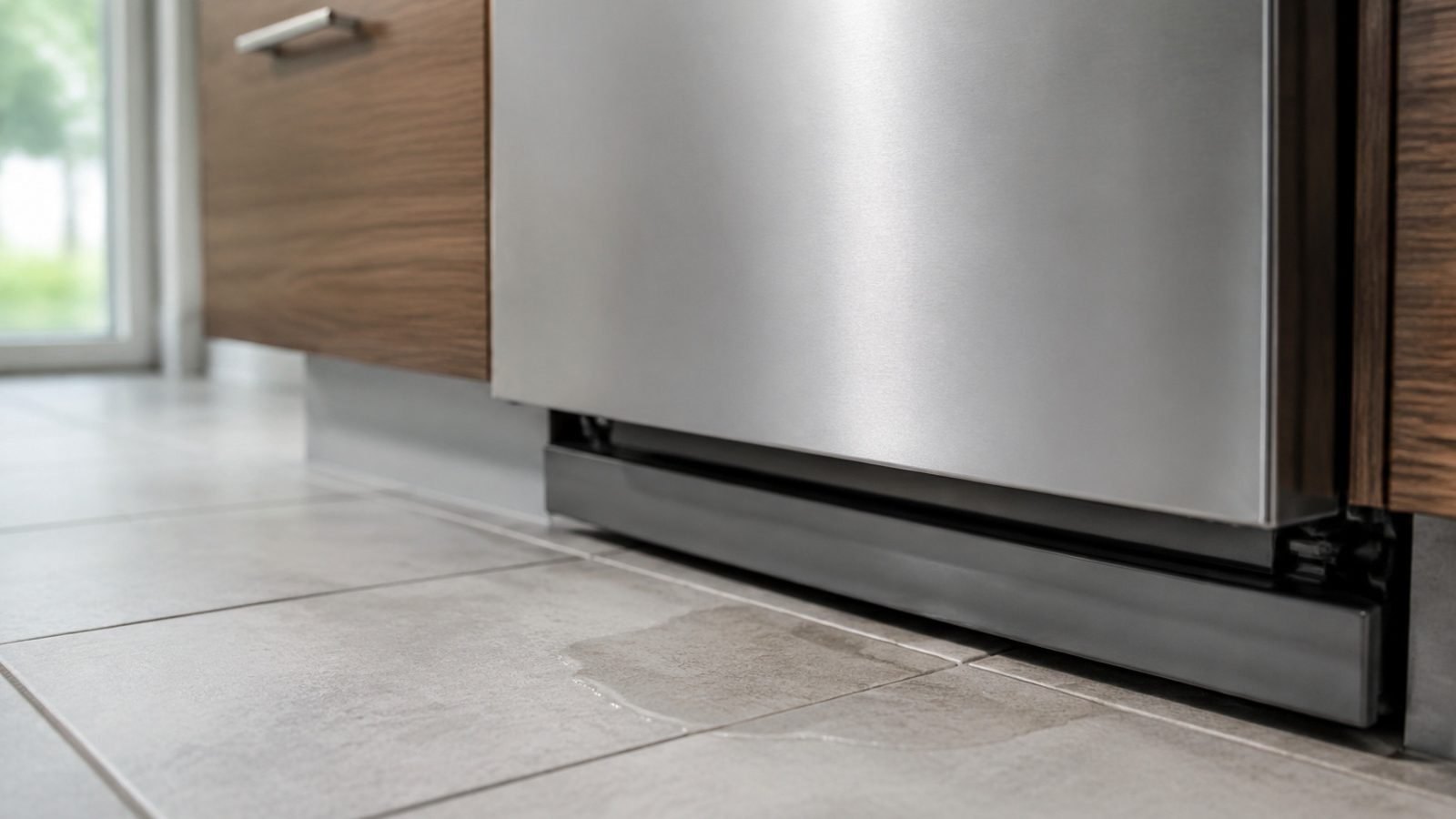
KitchenAid support notes that steam released through the door vent can condense and leave a small water spot when the door is opened, and that this is normal. A real leak is different: water on the floor in front of the dishwasher, or drips that grow as a cycle runs.
Watching one cycle with a dry towel on the floor can tell the two apart. If the floor stays dry and you only find a damp spot on the door edge, vapor is the likely cause.
Model-specific controls, filter access and service intervals are spelled out in the use-and-care manual; refer to it before you start. Only clean the parts it calls user-serviceable, stick to the recommended cleaning products, and reinstall every removable piece exactly the way it was meant to sit.
Another attempt should wait until obstructions are cleared, an oversized load is cut down, and airflow, water supply and door clearance are all unrestricted. Resetting again and again is a poor habit: it can conceal an on-and-off fault and leave water, heat or pressure in the wrong place.
Safe to try
Leave to a technician
KitchenAid’s leak guidance lists too many suds, from the wrong or too much detergent or soap left on dishes washed by hand, a damaged or debris-fouled door seal, and an unlevel dishwasher. Spilled rinse aid can also cause excess suds, so wipe any drips and do not overfill the dispenser.
A loose or bent door latch can let the door unlatch or leak during a cycle, and a lower rack installed backward can keep the door from latching at all. If the latch itself looks bent, do not bend it back; a technician should inspect it.
If leaks continue after one controlled test, or water shows up under the cabinet, the cause is beyond a seal wipe and needs a visit.
Once the simple checks change nothing, owner-level work is finished. Testing internal wiring, heating circuits, pumps, motors, refrigerant lines, gas connections or control boards takes the right instruments and a technician able to verify that the repair is safe.
Do not wait to arrange service when the problem is progressing, a breaker trips, a leak reaches electrical parts, something smells hot or burnt, grinding starts up, or the appliance can no longer complete a normal cycle. Never carry on using it while a safety warning is showing.
Tell the technician the model number, precisely what happens, when it first showed up, which settings were selected, and how each safe check came out. Photographing a code or describing a noise adds helpful detail, but do not remove any cover to capture it.
Observation cannot replace a repair, but it is the strongest first move. Take care of the simple conditions, hold on to any helpful error information, and leave anything electrical, gas, sealed-system or mechanical inside the unit to a qualified technician.
Yes. KitchenAid’s guidance names too many suds as a cause of door leaks. Use the amount the manual recommends and avoid hand-washing soap residue on dishes.
It can. KitchenAid lists an unlevel unit among the causes of door leaks, because water can run toward the door edge. Leveling is adjusted at the feet, but if it requires pulling the dishwasher out, a technician can do it.
Wiping debris from the seal is a safe check. If the gasket is cracked, torn or deformed, it is better to have it evaluated, since a wrong fit can leave the leak in place.
Need help now? Visit our services page or contact us.
Official manuals and support notes are available on KitchenAid owner support.
Copy down the full model number ahead of ordering parts; revisions to boards and sensors can alter which part number fits.
A lone power reset can wipe out a passing fault; a code that returns again and again usually points to something physical still wrong.
Clear vents and filters stay clear only if you check them; blocked airflow often imitates an electrical or sensor fault.
Stop using the appliance and have a professional inspect it whenever water, burning smells or sparking show up.
Use the correct detergent amount, confirm the door closes fully, and inspect the gasket for food debris or damage along the bottom edge.
Only if there is no burning smell, smoke, sparking, gas odor, water near electricity, or other safety warning. Otherwise stop and arrange service.
A tumbling drum with no heat may still be an airflow or setting issue — verify…
Front leaks on a KitchenAid washer often involve the door gasket, dispenser, or drain path —…
Low flow and drips after use often relate to filter, supply, or pressure — not always…
Share a few details and we’ll confirm an appointment. Prefer to talk? Call us and we’ll help right away.
Fields marked with * are required.