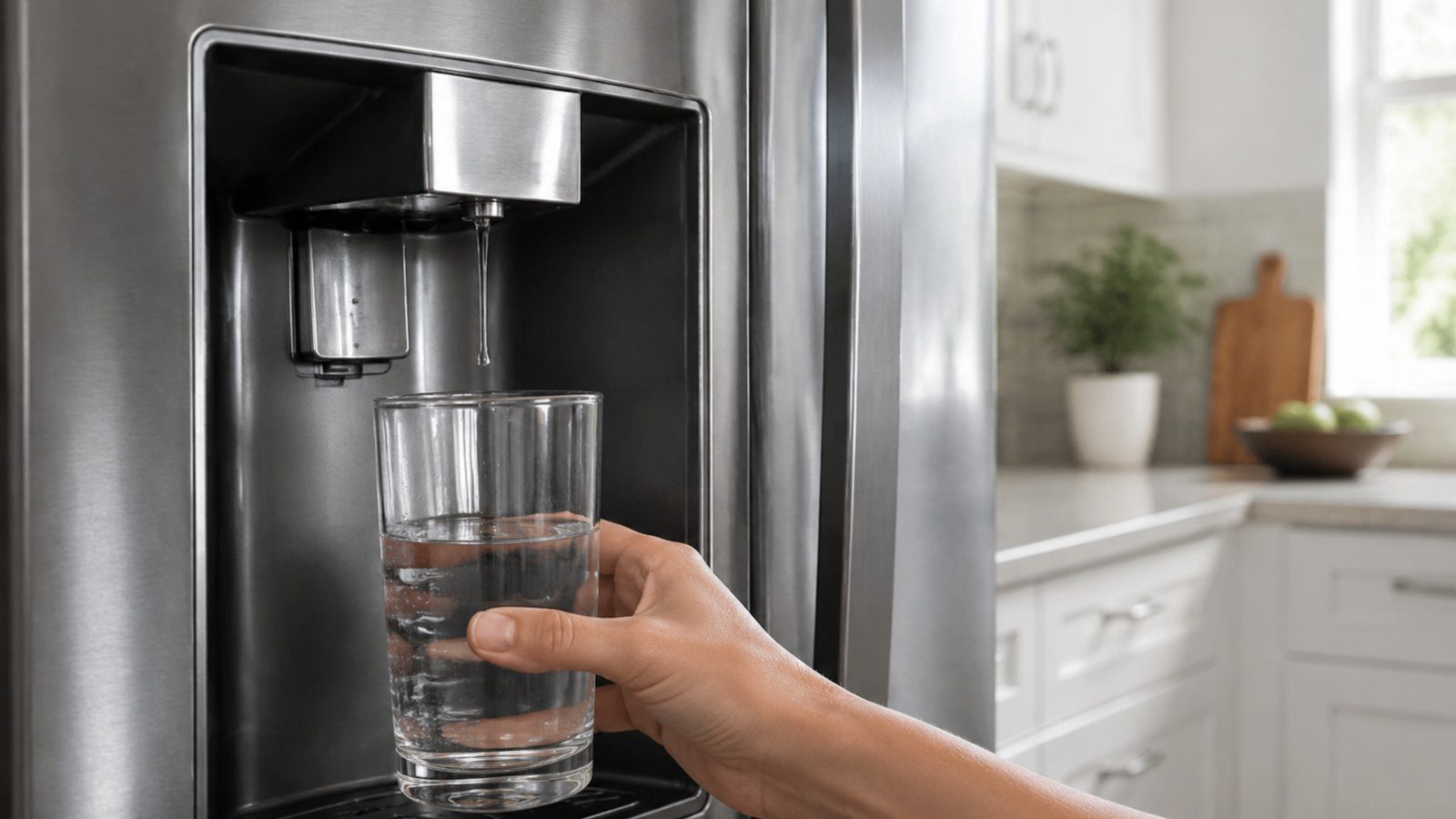

Low flow and drips after use often relate to filter, supply, or pressure — not always a failed valve.
A slow or dripping water dispenser most often comes down to the filter and the water line: a filter that was recently changed or installed wrong, air in the line, or a supply that is partly shut or pinched behind the refrigerator. Run through those checks first. A drip that continues well after the dispenser is released, or one that never stops, is the point to book service.
A water dispenser that runs slowly or keeps dripping on a KitchenAid refrigerator interrupts the kitchen routine. The symptom cannot single out a failed part, so begin with observations that are safe, easy to repeat and valuable if you later arrange a repair visit.
Keep routine upkeep apart from work that needs testing or disassembly. Do not defeat a lock, a cutout or a displayed fault to keep the appliance in use. A few notes made now can make the later diagnosis faster and more precise.
Replace or reset the filter as the manual says, run several cups through to push out air, and confirm the household supply valve is open all the way. Leave the refrigerator in its usual position and force no panel, fitting or control. If a small change helps, test with normal use before drawing a conclusion.
A freshly changed filter, a supply valve that is only partly open, or air left in the line after installation can cut flow for a while. Notice whether the problem is constant, linked to a certain setting or only appears after use. That helps more than operating the dispenser again and again. Running a few cups through after every filter change, per the manual, belongs to the installation itself and is not an optional step.
| Symptom | Likely cause | Safe check |
|---|---|---|
| Slow flow | Filter or air | Replace or purge |
| Drip after use | Normal residual | Observe briefly |
| Continuous drip | Valve issue | Book service |
KitchenAid support gives a simple filter test: remove the filter and dispense water. If water flows normally without it, the filter was installed incorrectly or is the restriction. The same page says to replace the filter every six months or when the filter light comes on.
Also check how far the refrigerator sits from the wall. Pushing it back too far can pinch the water line, which slows the flow in the same way a clogged filter does. Pull it out gently, if you can do so safely, and look at the line without disconnecting anything.
The use-and-care manual lists controls, filter access and replacement intervals for your model. Clean only the parts it calls user-serviceable, use the products it recommends, and fit each removable part back the way it was meant to sit.
Before the next try, clear anything in the way and make sure the water supply, airflow and door clearance are unrestricted. Steer clear of repeated resets, which can bury an intermittent fault and leave moisture or pressure in the wrong place.
Safe to try
Leave to a technician
KitchenAid notes that air trapped in the line after a filter change can slow the dispenser and make water look cloudy or bubbly; flushing clears it, and the amount to flush is model-specific, so follow your manual. Low household pressure, including some reverse osmosis systems, can also reduce flow.
The filter status light does not reset itself on most models, so reset it after every change. A light that stays on does not by itself mean the dispenser is faulty.
A drip that continues well after the dispenser is released, or one that never stops, is the point to book. Slow flow that survives the filter and line checks also qualifies.
When the simple checks leave things as they were, stay within owner-level work. Wiring inside the refrigerator, valves, pumps, refrigerant lines and control boards need proper instruments and a technician trained to confirm the repair.
Arrange service soon if the flow is getting worse, the breaker trips, water pools near electrical parts, a scorched or hot odor appears, a new grinding sound begins, or the dispenser cannot work normally. Do not keep operating an appliance that shows a safety warning.
Provide the model number, what exactly happens, when it started, the filter’s installation date if you know it, and what each check above showed. A picture of an error on the display or a short description of a sound helps, but never remove a cover for it.
Close observation does not stand in for repair, yet it is a good first move. Cover the simple conditions, preserve any error information, and pass electrical, sealed-system and deeper mechanical jobs to a qualified appliance technician.
KitchenAid says cloudy or bubbly water after a filter change is trapped air and clears with flushing. Dispense as your manual instructs; if it stays cloudy after that, book a check.
On most models it does not. After each filter change you reset the status light as your manual shows, otherwise it can stay lit even with a new filter.
Yes, it can pinch the water line. KitchenAid’s ice maker guidance also warns against pushing the refrigerator back far enough to squeeze the line.
Need help now? Visit our services page or contact us.
Official manuals and support notes are available on KitchenAid owner support.
Before you order a part, record the whole model number, since sensor and board revisions can change the correct part number.
Cutting power once may clear a passing glitch; a code that keeps coming back typically means a physical cause is still present.
Keep the filter replaced on schedule and the vents clear between visits, because restricted flow or airflow often passes for an electrical or sensor failure.
Stop using the refrigerator and arrange a professional inspection if there is water where it should not be, a burning smell or sparking.
Replace or reset the filter per the manual, dispense several cups to purge air, and confirm the household supply valve is fully open.
Only if there is no burning smell, smoke, sparking, gas odor, water near electricity, or other safety warning. Otherwise stop and arrange service.
A tumbling drum with no heat may still be an airflow or setting issue — verify…
Door leaks often trace to detergent, loading, or gasket condition before any pump or tub repair.
Front leaks on a KitchenAid washer often involve the door gasket, dispenser, or drain path —…
Share a few details and we’ll confirm an appointment. Prefer to talk? Call us and we’ll help right away.
Fields marked with * are required.