
Musty or food smells usually come from filters, standing water, or loading habits — not a failed motor.
A dishwasher odor usually starts with trapped food in the filter area or moisture held against the door seal. Clean the filter as the manual describes, wipe the gasket, and let the door stand slightly open to dry. A burning smell is different: stop using the dishwasher and book service, and a sewage-like smell points toward the drain path rather than the tub.
A smell coming from a KitchenAid dishwasher can disrupt an ordinary day in the kitchen. The odor alone does not point to a specific failed part, so begin with observations that are safe, can be repeated, and would help if you later book a repair visit.
Everyday upkeep is one thing; anything needing measurement or dismantling is another, and the notes below keep them apart. A lock, a safety switch or a fault message must never be overridden for the sake of keeping the machine going. Observations written down today make the diagnosis quicker and sharper.
Follow the manual to clean the filter and sump area, wipe the door gasket, and run a cleaning cycle if the manufacturer offers one. Do all of this with the dishwasher sitting in its usual spot, without prying at panels, fittings or controls. When a small adjustment changes the result, run one ordinary cycle before concluding anything.
Debris caught in the filter, a door that is not shut all the way, or dishes carrying leftover food can leave a smell behind between runs. Ask yourself when it appears: each time, only with certain loads or settings, or once the machine has been going a while. Answering that is worth more than restarting the cycle again and again. Dirty plates that sit for a day inside a closed tub are an easy source of odor to avoid.
| Odor type | Likely cause | Safe check |
|---|---|---|
| Musty | Trapped moisture | Leave door ajar briefly |
| Food smell | Filter debris | Clean filter |
| Burning smell | Heater residue | Stop and book service |
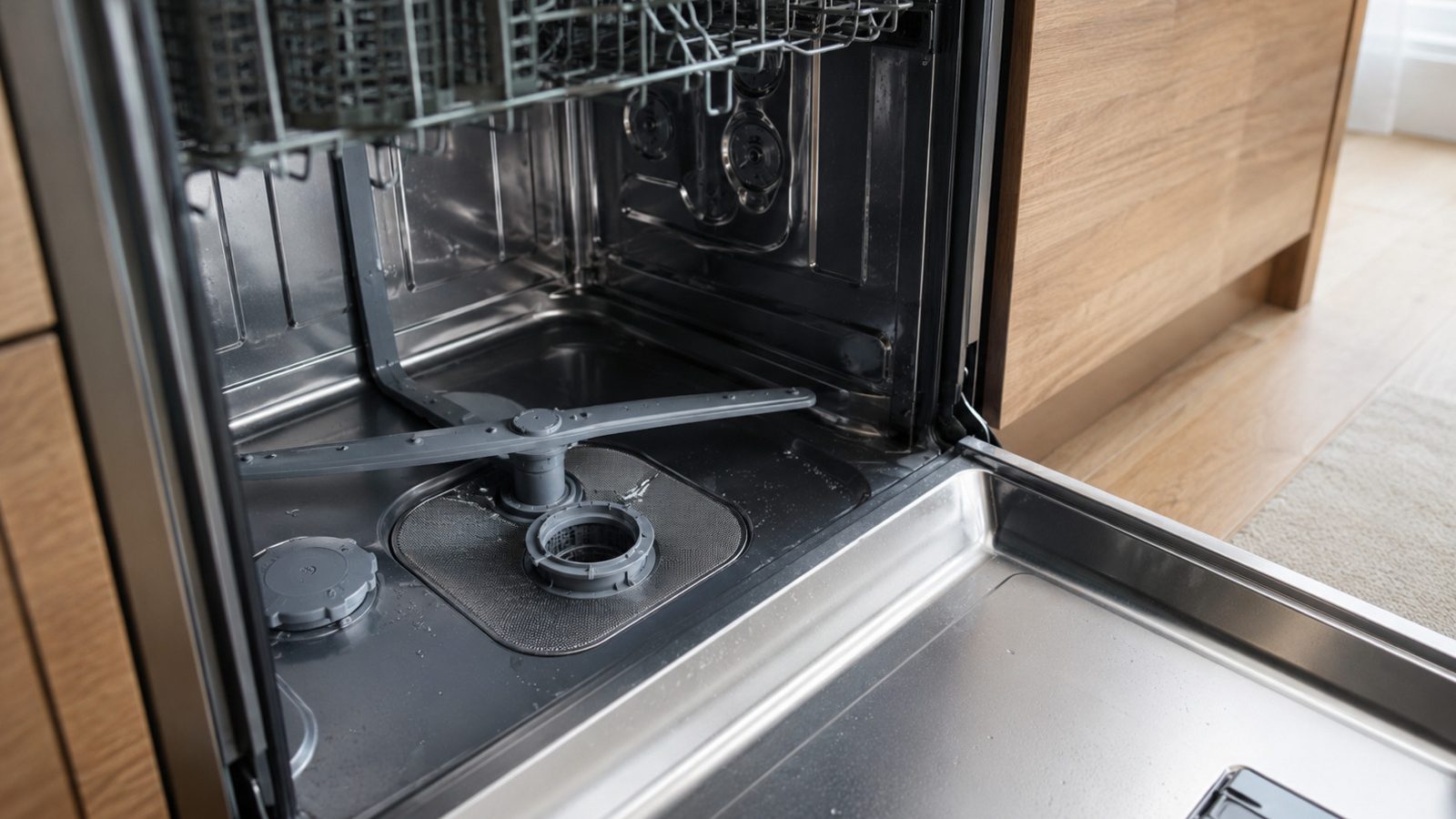
Two filter designs are found in KitchenAid dishwashers. One is a removable filter that you rinse clean, and the other is a maintenance-free design with a foreign object cup under the lower rack. When debris fills that cup, push the center tab, lift the cup out, empty it, and set it back until it locks.
Rinse the removable filter under running water and use a soft brush for hard-water deposits, never a wire brush or scouring pad. Look in the filter area for larger objects such as toothpicks, broken glass or olive pits and remove them by hand. Do not run the dishwasher without the filters properly installed.
Your use-and-care manual lists the controls, filter access and maintenance intervals that apply to your exact model, so read it first. Limit cleaning to parts the manual describes as user-serviceable, use only the products it recommends, and put each removable part back in the position it was designed for.
Ahead of another cycle, remove anything blocking the way, lighten a load that is unusually heavy, and confirm nothing is choking airflow, the water supply or the clearance around the door. Resist repeated resets, since they can mask an intermittent fault and leave water, heat or pressure where it does not belong.
Safe to try
Leave to a technician
A sewage-like smell can indicate a clog, or a drain hose that is kinked or sagging, according to KitchenAid support. A drain hose also needs a high loop or an air gap to keep dirty water from flowing back into the tub, which is worth knowing if the smell appeared after a sink or disposal was serviced.
Support guidance also mentions running affresh Dishwasher Cleaner monthly to help prevent filming, spotting and odors, and offers a white vinegar method as an alternative. Do not mix vinegar with bleach or other chemicals.
A burning smell means stop using the dishwasher and book service. A sewage-like smell points to the drain path, not the tub.
Once the odor persists past the basic checks, stop short of anything deeper. Pumps, motors, wiring inside the cabinet, refrigerant lines, heating circuits and control boards cannot be judged without test equipment, so leave them to a technician who can confirm the repair is safe.
Book service without delay if performance keeps getting worse, a breaker trips, water leaks near electrical parts, there is a hot or burnt smell, a new grinding noise appears, or a normal cycle cannot finish. An appliance that shows a safety warning should not be kept running.
A good report to the technician lists the model number, what exactly is happening, when it began and which settings you had chosen, along with how the safe checks turned out. Snap a photo of any code or describe the sound if that helps, but keep every cover in place while doing so.
Watching and noting is not repair, though it remains the most sensible opening step. Look after the simple conditions, keep any error details that might matter, and give electrical, gas, sealed-system and internal mechanical jobs to a qualified appliance technician.
KitchenAid recommends cleaning about every 30 days, and an owner’s manual for one model includes a chart that depends on how many loads you run and whether you pre-rinse. Check the chart in your own manual.
That smell can point to a clogged or kinked drain hose, or to a missing high loop or air gap. Cleaning the filter is a safe first step; anything involving the hose behind the unit is better left to a technician.
Support guidance describes a white vinegar method run with no detergent, and affresh is offered as an alternative. It helps with residue and film, not with a clog, so persistent smells still need the filter and drain path checked.
Need help now? Visit our services page or contact us.
Official manuals and support notes are available on KitchenAid owner support.
Record the complete model number before you order any part, since board and sensor revisions can change the correct part number.
One power reset may clear a temporary fault, but if the same code keeps coming back, a physical cause is probably still there.
Between service visits, keep vents and filters clear, because restricted airflow can look just like an electrical or sensor failure.
Pooled water, a smell of burning, or sparks: any of these calls for turning the appliance off and getting a professional to inspect it.
Clean the filter and sump area per the manual, wipe the door gasket, and run a manufacturer-approved clean cycle if available.
Only if there is no burning smell, smoke, sparking, gas odor, water near electricity, or other safety warning. Otherwise stop and arrange service.
Flame color and shape changes on gas cooktops can signal cleaning needs or a supply issue…
Large cavities and hidden elements can make preheat feel slow — learn what is normal and…
Frost layers often point to airflow, door closure, or defrost issues — not always a failed…
Share a few details and we’ll confirm an appointment. Prefer to talk? Call us and we’ll help right away.
Fields marked with * are required.