
Damp dishes are often about drying method and loading, not a broken machine.
A KitchenAid dishwasher that leaves dishes wet is most often dealing with how it dries and not with a failed part. Check the rinse aid, the load position, plastic items, and whether the door was opened early. If every load stays wet even after those changes, book a diagnosis of the heating or control side.
Dishes that come out wet make a dishwasher feel like it failed at its one job. A wet load does not point to one particular part, so make observations that are safe and repeatable, which also help should you arrange a repair.
There is a clear divide between ordinary care and jobs needing instruments or a panel taken off. Overriding a lock, a safety switch or an error message to stay in service is off the table. Brief notes written at this point help a diagnosis go faster and come out more accurate.
Top up the rinse-aid dispenser, check that its setting is above the minimum, and tilt cups or plastic containers so water cannot collect in them. Keep the dishwasher in place and do not force panels, fittings or controls. If a small change affects the outcome, run one normal cycle before deciding what caused it.
Dishes dry through condensation, which needs warm surfaces and moving air, so opening the door before the program ends can hurt the result. Also look for a pattern: does it happen every time, only with a certain load or setting, or after the machine has been running a while? That is more useful than restarting it repeatedly. Too much rinse aid creates excess suds, so wipe up any spill.
| Outcome | Probable cause | Check you can make |
|---|---|---|
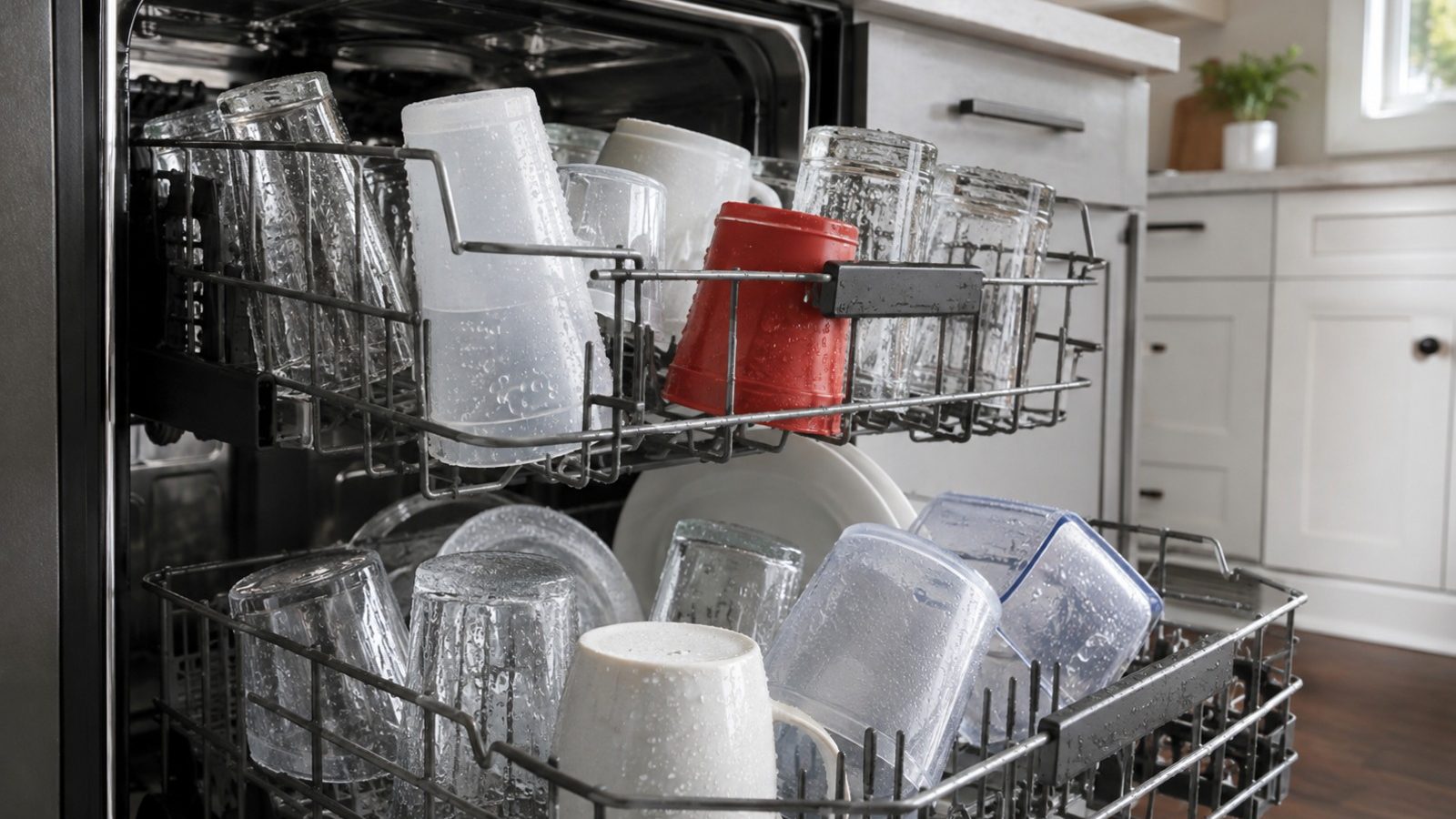
| Plastic still wet | The material holds on to water | Tilt the items |
| Water in the mugs | How they were loaded | Turn cups face down and tilted |
| Everything comes out wet | Rinse aid or a setting | Top up the rinse aid |
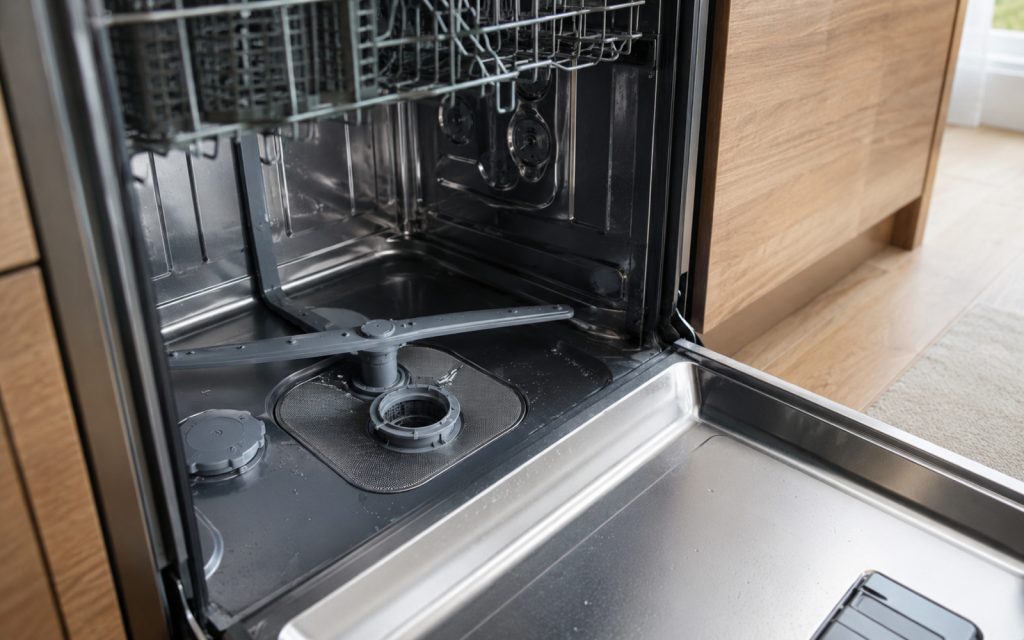
Many dishwashers dry by heat and condensation: the final rinse warms the dishes, and moisture condenses on the cooler tub walls and runs away. Condensation on the tub walls is part of normal drying, and vapor released through the door vent can leave a water spot after the door is opened. Rinse aid helps water sheet off dishes so that less is left to evaporate.
Guidance for some models notes that plastic and nonstick items dry poorly because their surfaces hold droplets. Towel drying may be needed for those, and angling concave items so water drains helps. A hot-water supply that is too cool can also hurt both washing and drying, and some guidance suggests running hot water at the nearest faucet first.
Open the manual for anything model-specific, whether that is a control, a filter or a service interval. Clean what it calls user-serviceable and nothing else, use the cleaners it recommends, and reinstall each loose part in the spot it was designed to occupy.
Run it again only after blockages are gone, an overloaded drum or rack is lightened, and airflow, water supply and door clearance are free of restrictions. Frequent resets tend to hide intermittent faults, and they may leave water, heat or pressure where none should remain.
Fine to attempt
For a technician only
Some models have options such as Heat Dry, ProDry, or Door Open Dry. They change how long drying takes and how it is done, and a short cycle can leave a poorer result than a normal one. Door Open Dry opens the door a few inches after the wash and, on the guidance for some models, only does so if the wash completed.
Wet dishes that appear only in one rack or only for certain items suggest loading or material. Wet dishes everywhere, with the rinse aid full and a normal cycle, suggest the heating side may need testing. Some models blink an indicator to signal a possible heating element problem, but how that appears is model-specific, so read your manual before interpreting a blinking light.
If every load stays wet after rinse aid, load position and door timing are corrected, book a diagnosis of the heating or control side.
Once the simple checks have been done without any difference, go no further yourself. Heating circuits, wiring, pumps, motors, control boards, gas connections and refrigerant lines inside the unit call for proper test gear and a technician who can make sure the repair is safe.
Arrange a visit quickly if the appliance is getting worse over time, trips the breaker, drips near electrical parts, gives off a burnt or hot odor, starts grinding, or cannot finish its regular cycle. Once a safety warning appears, stop using it.
The model number, the specific symptom, the onset, the chosen settings and the findings from the safe checks make a complete report. Add a photo of any code or a short description of a sound if you can, without opening a cover to obtain either.
An organized look at the problem cannot take the place of a repair, yet it is where to start. Handle the simple conditions, keep the error information that might prove useful, and give electrical, gas, sealed-system and internal mechanical jobs over to a technician qualified in appliance repair.
Plastic items, loading that lets water pool, an empty rinse aid dispenser, or opening the door early are the usual suspects. Try a normal cycle with rinse aid and a changed load before suspecting a part.
Guidance for some models describes condensation on the tub walls as part of normal drying. A water spot after opening the door can also come from vapor released at the door vent.
It can. Guidance for some models says a one-hour wash reduces drying performance, while a heated dry option adds time but helps.
Need help now? Visit our services page or contact us.
Official manuals and support notes are available on KitchenAid owner support.
Before ordering anything, write out the complete model number. A newer revision of a control board or sensor can mean a different correct part number.
A single reset of power may be enough for a brief fault, but the same code showing up repeatedly tends to mean a physical cause remains.
Unblocked vents and clean filters matter between visits, because choked airflow can mimic electrical and sensor problems.
Sparking, a smell of burning or unexpected water call for an immediate stop to use and a professional inspection.
Fill the rinse-aid dispenser, confirm its setting is not at minimum, and angle cups or plastic containers so they cannot hold water.
Only if there is no burning smell, smoke, sparking, gas odor, water near electricity, or other safety warning. Otherwise stop and arrange service.
Flame color and shape changes on gas cooktops can signal cleaning needs or a supply issue…
Large cavities and hidden elements can make preheat feel slow — learn what is normal and…
Musty or food smells usually come from filters, standing water, or loading habits — not a…
Share a few details and we’ll confirm an appointment. Prefer to talk? Call us and we’ll help right away.
Fields marked with * are required.