
Water supply, settings, and time after a reset explain many ice-maker complaints.
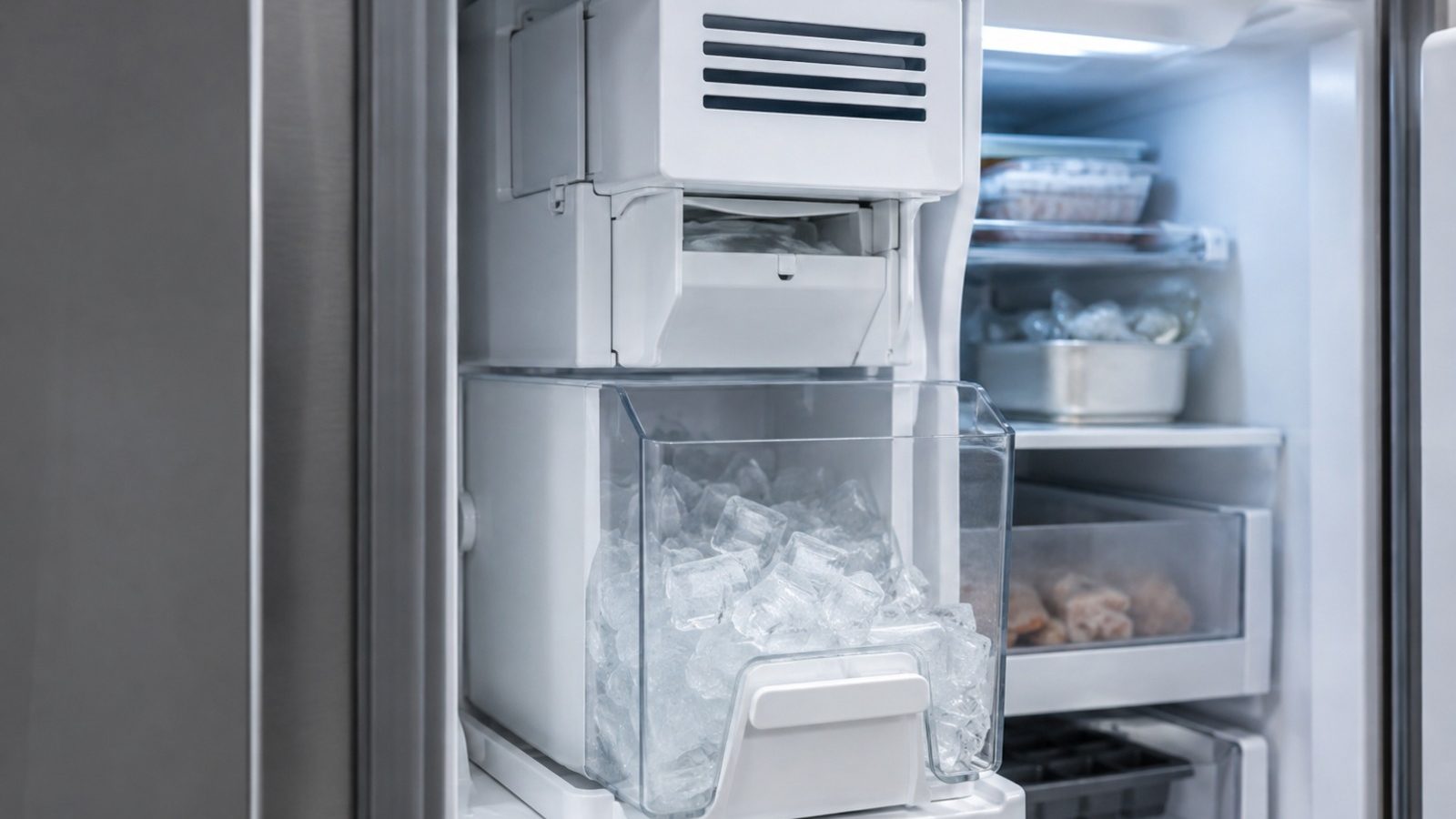
An ice maker that stops producing is usually blocked at the water supply, the freezer temperature, the on-off setting or the filter. Check that the ice maker is on, the bin is seated, the water line is not pinched, and the filter is installed correctly. After a reset or a new filter, allow time for a full batch before deciding it has failed.
An ice maker that has stopped making ice upsets the household routine. One symptom cannot pinpoint a broken part, so begin with observations that are safe, can be repeated, and would help if you end up arranging a visit.
Everyday care and work that needs testing or taking the unit apart are two different things. Never override a lock, a cutout or a fault message to force the appliance to run. Short notes taken now make a later diagnosis quicker and more precise.
Make sure the ice maker is switched on, the bin sits properly in its place, and the water supply to the refrigerator is open with no visible kink in the line. Do the check with the refrigerator in its usual position, forcing no panel, fitting or control. If a small adjustment changes things, let one normal production period finish before concluding anything.
Right after a filter change, a reset or a move, ice may be slow while the system refills and freezes a whole batch. Watch for a pattern in when the trouble shows up: always, only under certain settings, or after the unit has been running a while. That is more telling than switching things off and on repeatedly. Pushing the refrigerator back can pinch the supply line and halt ice production.
| Symptom | Likely cause | Safe check |
|---|---|---|
| No cubes | Ice maker turned off | Review its setting |
| Small cubes | Weak water flow | Verify the supply |
| Recent reset | Startup delay, which is normal | Wait through one complete cycle |
KitchenAid’s ice maker troubleshooting page names four typical causes: a restricted water supply, freezer temperature, an ice maker that is switched off, and water filter problems. That list helps you check in an order that does not require opening anything.
The freezer should sit between 0 and 5 degrees Fahrenheit for ice production. If the freezer is warmer, the ice maker may not freeze a batch.
For controls, filter access and service intervals specific to your model, turn to the use-and-care manual. Clean only the parts it describes as user-serviceable, using the cleaners it names, and seat each removable part just as it was designed to fit.
Ahead of another attempt, clear anything in the way, ease off any overloaded shelves and be sure airflow, water supply and door clearance are not restricted. Frequent resets are best avoided, since they can conceal an intermittent fault and leave moisture, warmth or pressure in the wrong place.
Safe to try
Leave to a technician
To reset, press and hold the reset button for a few seconds; on models with no button, unplug the refrigerator for one minute. Do this once rather than repeatedly.
The filter should be replaced every six months or when its light comes on. To test it, remove the filter and dispense water; if water flows normally, the filter was installed incorrectly. Do not push the refrigerator back so far that the water line is pinched. If the ice maker is on with no water line connected, buzzing, an overcold refrigerator and freezing food can result.
Allow time for a full batch after a reset or a new filter. If production still does not return after the supply, setting and filter checks, book a diagnosis.
Past the basic checks, the remaining jobs are not for owners. Control boards, interior wiring, heating circuits, pumps and motors, plus anything involving refrigerant or gas lines, call for proper instruments and a technician who confirms the work is safe.
Call for service without delay if the fault is worsening, the breaker trips, water collects near electrical parts, a scorched or hot odor appears, a fresh grinding noise starts, or the appliance cannot get through a normal cycle. If it shows a safety warning, stop running it.
Pass along the model number, the exact symptom, the start date, the settings in use and how the safe checks turned out. A snapshot of a displayed error or a short description of a sound is welcome, though no cover should ever come off to get one.
Watching closely does not replace a repair, but it is the strongest first move. Work through the simple conditions, keep any error information, and hand electrical, gas, sealed-system and deeper mechanical jobs to a qualified appliance technician.
According to KitchenAid, an ice maker left switched on with no water line connected can buzz, and it can also leave the refrigerator too cold. With no line attached, switch it off.
The support page gives a range of 0 to 5 degrees Fahrenheit. Warmer than that, and ice production may stall.
Low water flow, such as from a clogged filter, a kinked line or air in the lines, can cause it. KitchenAid suggests flushing the system whenever the filter is changed.
Need help now? Visit our services page or contact us.
Official manuals and support notes are available on KitchenAid owner support.
Before ordering a part, copy down the whole model number; board and sensor revisions may change which part number is right.
A lone power reset may clear a temporary fault, yet a code that returns again and again usually signals a physical cause.
Between visits, keep the vents and filters free of blockage, as limited airflow often looks like an electrical or sensor problem.
Where water, a burning smell or sparking is present, switch the appliance off and have it inspected by a professional.
Confirm the ice maker is enabled, the bin is positioned correctly, and the refrigerator water supply is on without a visibly kinked line.
Only if there is no burning smell, smoke, sparking, gas odor, water near electricity, or other safety warning. Otherwise stop and arrange service.
A tumbling drum with no heat may still be an airflow or setting issue — verify…
Door leaks often trace to detergent, loading, or gasket condition before any pump or tub repair.
Front leaks on a KitchenAid washer often involve the door gasket, dispenser, or drain path —…
Share a few details and we’ll confirm an appointment. Prefer to talk? Call us and we’ll help right away.
Fields marked with * are required.