
Hot spots can be about placement and mode, though persistent temperature errors need testing.
An oven that cooks unevenly can have a simple explanation before it has a hardware one: a pan blocking airflow, a skipped preheat, or an off-center rack. Test with a single tray in the center after a full preheat. If one side keeps undercooking after that, or the results are far from the setting, book a temperature diagnosis.
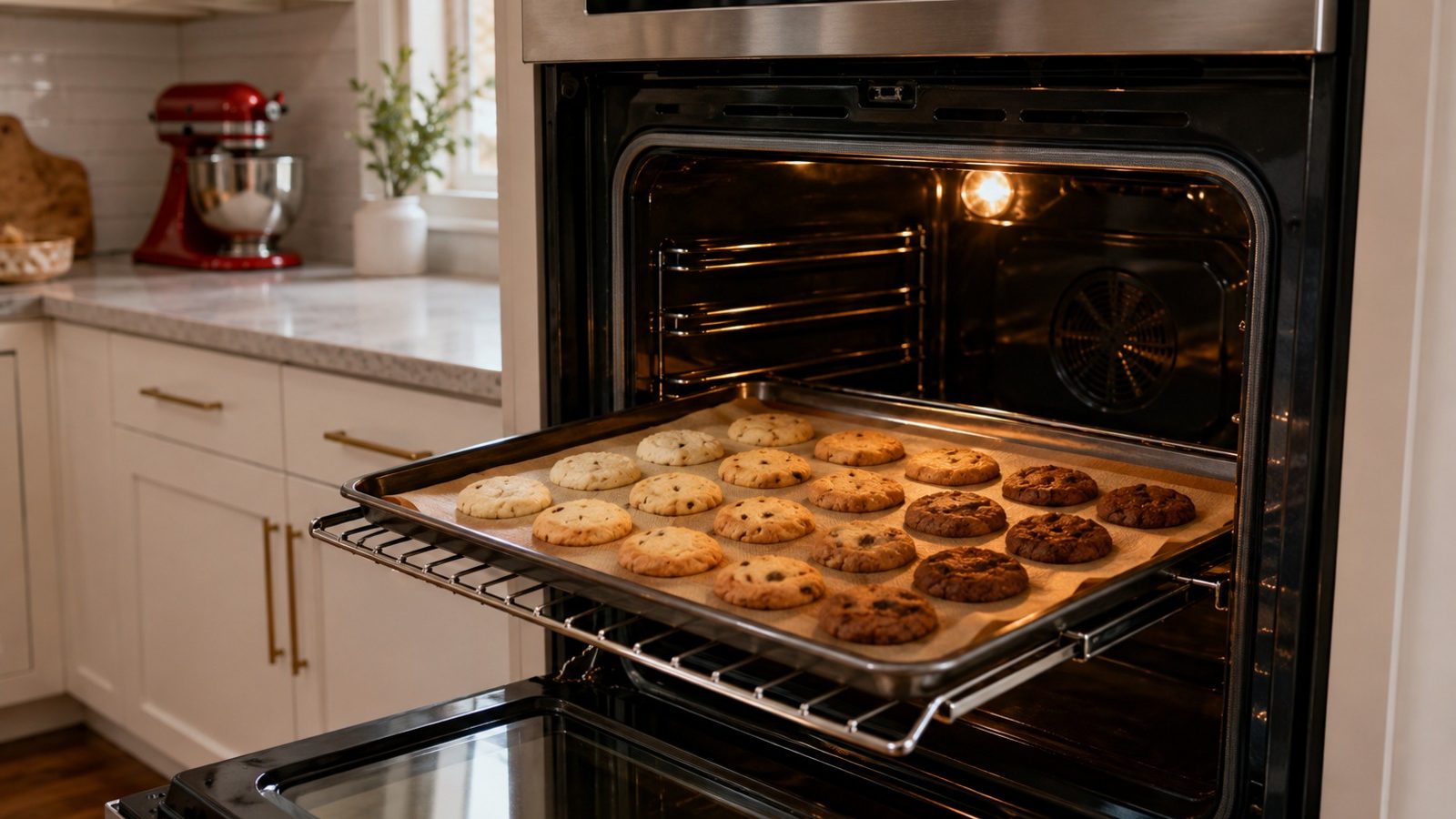
Food that browns on one side and stays pale on the other can throw off dinner plans. The pattern alone does not reveal a failed part, so collect safe, repeatable observations that would help a technician if you arrange a visit.
Tasks that need only a cloth, a filter rinse or a look are separate from tasks that need testing or opening things up. Never get around a lock, a safety switch or an error message to keep the appliance in use. A few early notes help a technician reach a quicker, more accurate answer.
Let the oven preheat all the way, put the food on a middle rack when the recipe permits, and skip oversized pans or crowded trays that block air movement. Keep the oven in its normal position and do not force panels, fittings or controls. If a small change affects the result, bake once normally before concluding anything.
If only one recipe turns out differently, technique may be the reason, but a side that always undercooks can justify a temperature diagnosis. Look for a pattern too: does it happen every time, only with a certain setting, or after the oven has run a while? That is worth more than repeated restarts. Telling a technician which side is lighter and on which rack gives them a place to start before the visit.
| Outcome | Probable cause | Check you can make |
|---|---|---|
| Browning that varies | Airflow is crowded | Bake a single tray in the center |
| Baking takes longer | Preheat was not finished | Wait for the ready signal |
| Big gap in temperature | A sensor or element | Book a test |
KitchenAid guidance for some ovens says to level the range and the racks, leave space around pans, and avoid foil covering a whole rack or the oven floor, since it disturbs airflow. Rack height is also adjusted by bakeware color, because dark and light pans take up heat differently. These changes cost nothing and are worth trying before blaming the oven.
Convection fans add a variable. On some models the fan cycles during preheat even in a non-convection mode, and the cooling fan can run after cooking depending on cavity temperature. Those sounds are normal and not a sign of uneven heating.
Your model’s manual answers questions about controls, filter access and service intervals. Clean the parts it describes as user-serviceable, use the products it recommends, and refit each removable piece so it sits as it did originally.
Before the next attempt, look for obstructions, lighten a heavy load, and confirm nothing is restricting airflow, the water feed or the room the door needs. Many resets in a row can mask a fault that comes and goes, and they risk leaving water, heat or pressure where it does not belong.
Fine to attempt
For a technician only
If a single recipe browns unevenly while others bake well, the recipe or pan is the likelier cause. If every dish browns more on one side regardless of rack and pan, the oven has a pattern worth reporting. An oven that finishes slowly, though, may simply not have been preheated or may have had its door opened often.
The oven temperature sensor and the calibration setting matter here too. The manual explains that calibration is adjusted in small steps, and the guidance cautions against changing it by a large amount at once. It also says a kitchen thermometer is not a reliable way to judge calibration, so a thermometer reading alone should not drive an adjustment.
If one side keeps undercooking after a centered tray and full preheat, or results sit far from the setting, book a temperature diagnosis.
Basic checks that change nothing are the signal to hand over. Pumps, motors, gas connections, control boards, refrigerant lines, heating circuits and internal wiring need correct test equipment and a technician capable of confirming that the work is safe.
Get it serviced promptly when the fault is worsening, the breaker trips, water gets near electrical parts, a hot or burning smell is noticeable, a new grinding sound starts, or a normal cycle will not finish. Never keep using a unit that displays a safety warning.
Tell the technician which model it is, what the symptom is in precise terms, when it first appeared, which settings were selected, and how the earlier checks came out. A code photo or sound description is a bonus; removing a cover to get it is not.
Looking closely is not a repair, but it is the strongest first step available. Address the easy conditions, retain any helpful error information, and send electrical, gas, sealed-system and internal mechanical problems to a qualified appliance technician.
Pan size, rack position, a crowded rack, or foil can all change airflow in the cavity. If a single centered tray still browns unevenly after a full preheat, the temperature system may need testing.
Some manuals describe a calibration setting that works in small steps. Use the manual’s method, change it only a little at a time, and do not rely on a kitchen thermometer to decide.
Guidance for some models says a fan can cycle during preheat and a cooling fan can run after cooking. Noise that continues with the door open is typically the cooling fan, which the guidance describes as normal.
Need help now? Visit our services page or contact us.
Official manuals and support notes are available on KitchenAid owner support.
Parts orders should start with the full model number written down, as board or sensor revisions can change the part that applies.
One reset can take care of a momentary fault, though a code that keeps returning usually indicates a physical cause that has not gone away.
Clear filters and open vents should be the norm between visits; blocked airflow may be mistaken for an electrical or sensor failure.
Leaks, burnt odors and sparking are all grounds to stop using the appliance and get it inspected by a professional.
Preheat fully, use a center rack where the recipe allows, and avoid oversized pans or crowded trays that block airflow.
Only if there is no burning smell, smoke, sparking, gas odor, water near electricity, or other safety warning. Otherwise stop and arrange service.
Flame color and shape changes on gas cooktops can signal cleaning needs or a supply issue…
Large cavities and hidden elements can make preheat feel slow — learn what is normal and…
Musty or food smells usually come from filters, standing water, or loading habits — not a…
Share a few details and we’ll confirm an appointment. Prefer to talk? Call us and we’ll help right away.
Fields marked with * are required.