
Small, safe habits — filters, seals, and descaling — help appliances run well for longer.
Simple KitchenAid maintenance is a short list of manual-documented tasks done on a schedule: dishwasher filter and cleaner, door seals, dryer lint screen, vent filters, and water filters. Pick one appliance at a time and put each task on a calendar. Anything that needs a panel off belongs to a technician.
Regular appliance upkeep is easy to put off. Guessing at a failed part is not the goal; the point is to gather safe, repeatable observations that will help if you later book a repair visit.
Everyday owner care is one thing; anything needing measurement or disassembly is another. Working around a lock, an interlock or a warning message to keep a machine going is never the answer. Writing down what you observe today helps the eventual diagnosis land on the right answer sooner.
Take the appliances one by one, and let each manual show which filters, seals, trays and cleaning cycles an owner is meant to handle. Keep the unit where it normally sits and never force a panel, fitting or control. If a simple adjustment changes things, run one normal cycle before deciding what it means.
Upkeep pays off most when it happens before anything goes wrong, so schedule recurring tasks on a calendar rather than waiting for an error. Notice whether trouble shows up every time, only with certain loads or settings, or just after the machine has been running for a stretch. That is worth more than restarting the machine again and again. A reminder set for the first of each month covers the monthly items.
| Job | Usual interval | Benefit |
|---|---|---|
| Clean the dishwasher filter | Once a month | Helps water drain |
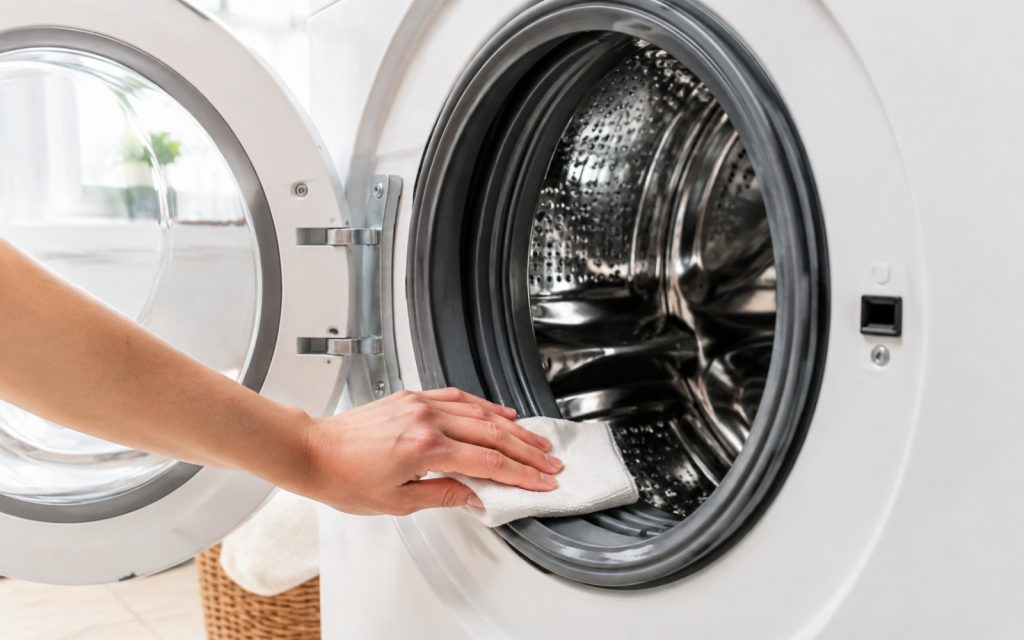
| Wipe the door seals | Once a month | Helps the door seal well |
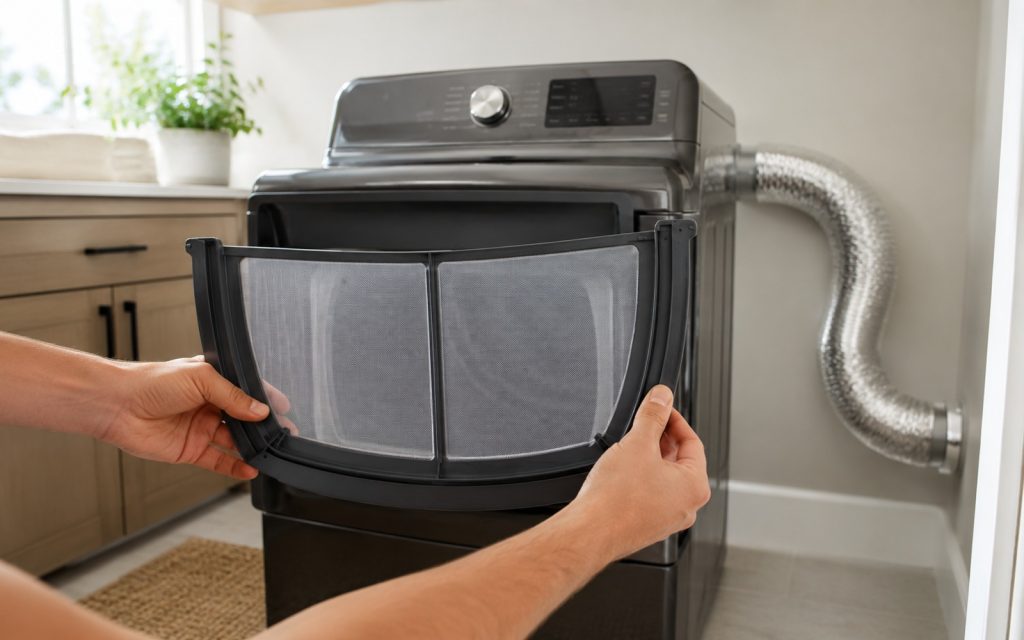
| Empty the dryer lint screen | With every load | Keeps air moving |
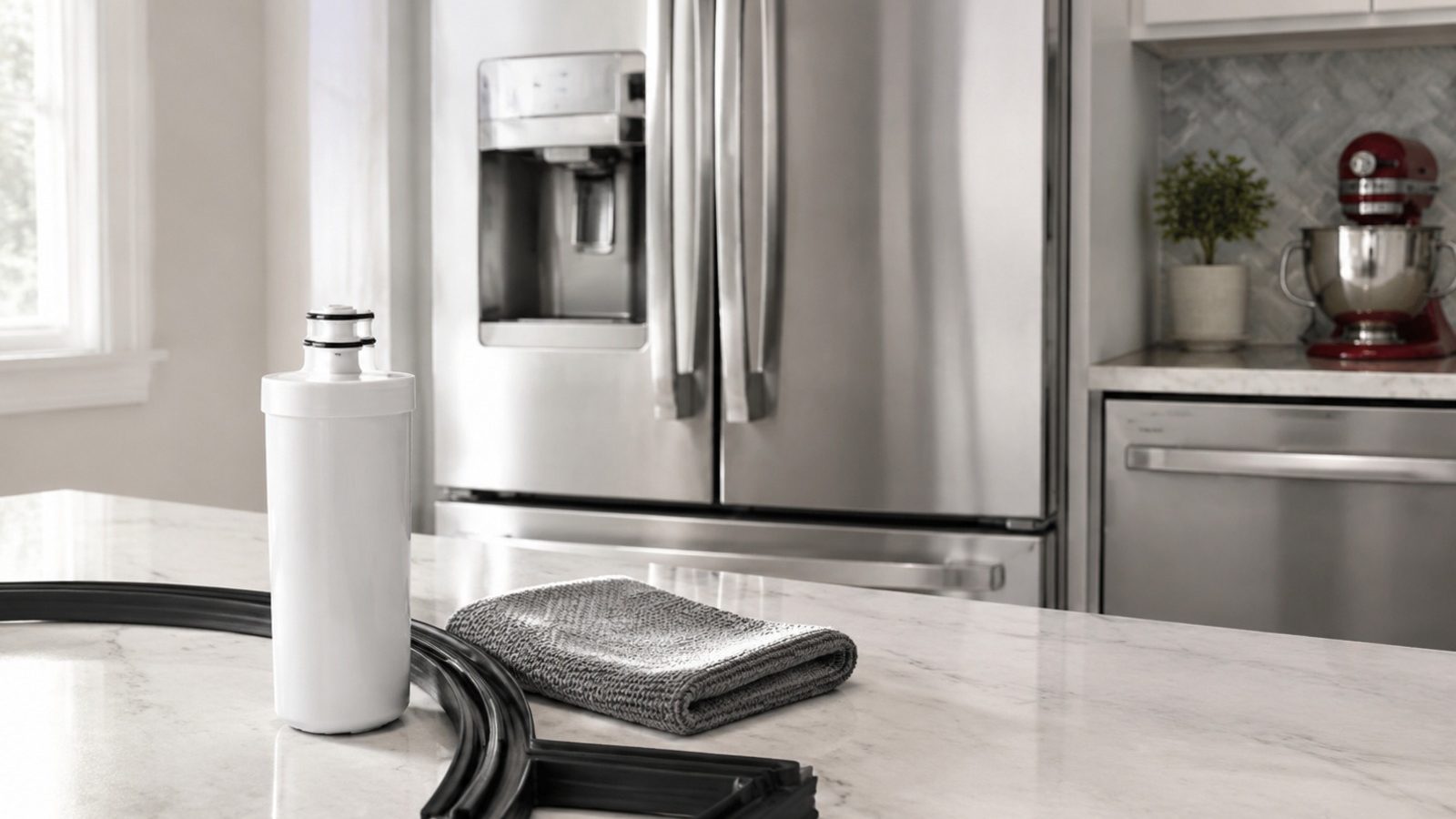
Some intervals come straight from KitchenAid guidance. The dishwasher should be cleaned about every 30 days, with affresh Dishwasher Cleaner run monthly to help prevent filming, spotting, and odors. Refrigerator water filters are replaced every 6 months or when the light comes on, and testing a filter that seems wrong is simple: remove it and dispense water, and if water flows the filter was installed incorrectly.
Other tasks follow the machine’s use. Dryer lint screens are cleaned every load, a washer is left open to dry between uses, and a vent hood grease filter is cleaned often in warm water and detergent and reinstalled locked in place. A recirculating charcoal filter is a different case, as it is not washable and gets replaced.
Model-specific details such as control behavior, how to reach a filter and how often to service it live in the use-and-care guide. Only parts it marks as user-serviceable should be cleaned, with the cleaners it names, and anything taken out must go back exactly where it belongs.
Another run should wait until obstructions are cleared, a very full load is reduced, and nothing is limiting air movement, water flow or the door’s swing. Repeated resets are best avoided, since they may conceal an intermittent problem and can leave water, heat or pressure trapped in the wrong place.
Fine to attempt
For a technician only
Maintenance protects airflow, drainage, and sealing, and those are the conditions behind many service calls. It does not prevent every fault, and a part can still fail on a well-kept machine. If a symptom appears despite regular care, a maintenance record shows what has been ruled out.
Keep tasks to the owner side. Lubricating internal mechanisms, removing panels, and using harsh chemicals on seals can cause damage, and the manual for each appliance says what is intended for homeowners.
Anything that needs a panel removed belongs to a technician. Owner care stays with manual-documented tasks.
Should the symptom persist after the simple checks, stop at what an owner can service. Gas fittings, refrigerant lines, motors, pumps, heaters, control boards and internal wiring require the right instruments and a technician who can verify the fix safely.
Prompt service is warranted when the problem is getting worse, a breaker trips, a leak reaches electrical components, the unit smells hot or burnt, it develops a grinding sound it did not have before, or it cannot get through a normal cycle. Keep running nothing that displays a safety warning.
Be ready with the model number, an exact description of the symptom, when it started, which settings were selected and how the checks above turned out. Photographing a code or describing a noise adds helpful detail; do not take a cover off to get it.
Watching carefully does not replace a repair, but it comes first. Fix the easy conditions, hold on to any error information, and let a qualified appliance technician handle electrical, gas, sealed-system and internal mechanical work.
The one that protects airflow or drainage for your appliances, such as the lint screen every load and the dishwasher filter on its schedule. Your manuals list others.
KitchenAid guidance says every 6 months or when the light comes on. Reset the filter status light after each change, since it does not reset by itself on most models.
Tasks the manual gives to owners do not. Anything beyond that, such as internal parts, wiring, or refrigerant, needs a technician.
Need help now? Visit our services page or contact us.
Official manuals and support notes are available on KitchenAid owner support.
Always copy down the entire model number prior to buying parts; revisions to boards and sensors can alter the correct part number.
A lone power reset sometimes resolves a temporary glitch, yet a code that returns again and again generally points to a physical problem still there.
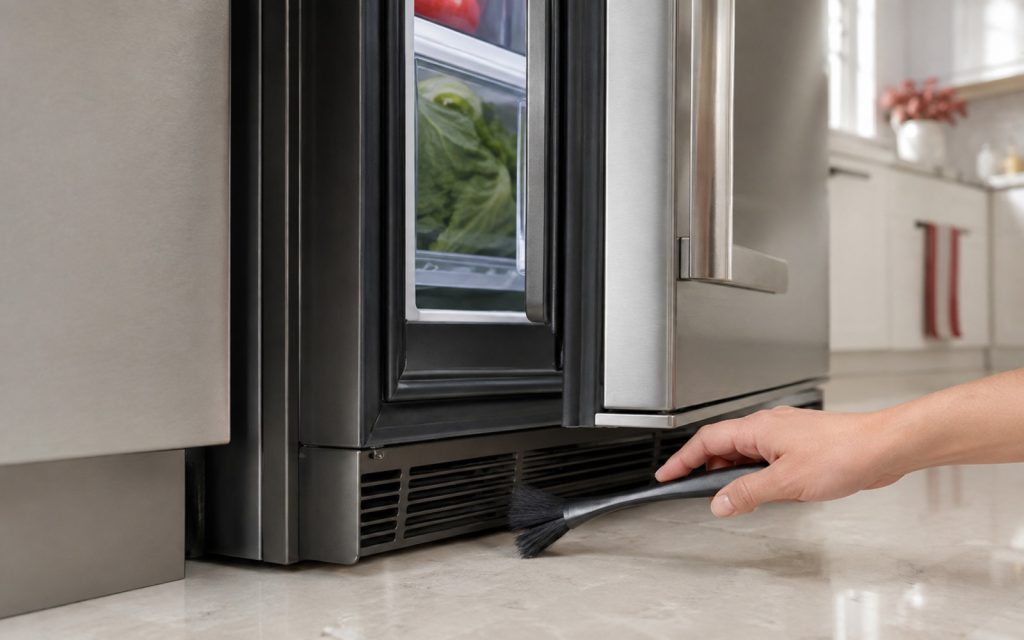
Vents and filters need to stay clear from one visit to the next, since restricted airflow can imitate an electrical or sensor fault.
Stop using the appliance if you notice leaking water, a scorched odor or sparking, and book a professional inspection.
Choose one appliance at a time and use its manual to identify the filters, seals, trays, and cleaning cycles intended for homeowner care.
Only if there is no burning smell, smoke, sparking, gas odor, water near electricity, or other safety warning. Otherwise stop and arrange service.
Clean venting improves drying performance and is an important home-safety habit.
Simple gasket, drawer, and drum care helps prevent musty odors in front-load washers.
Clear airflow and clean door seals help a refrigerator run efficiently.
Share a few details and we’ll confirm an appointment. Prefer to talk? Call us and we’ll help right away.
Fields marked with * are required.