
Clean venting improves drying performance and is an important home-safety habit.
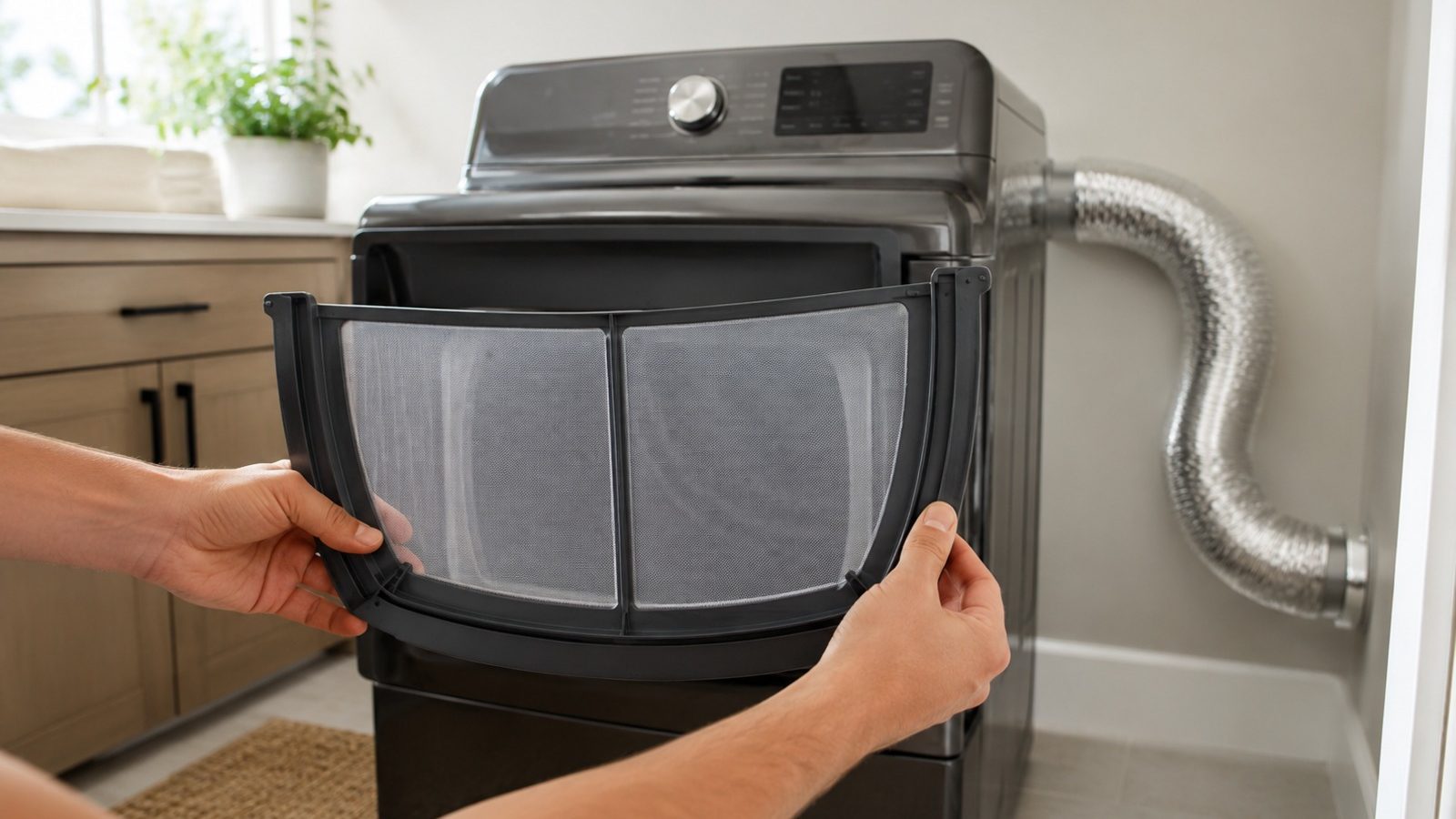
Dryer vent care comes down to two habits: clean the lint screen every load and keep the vent path from the dryer to the outside wall clear and uncrushed. Slow drying, hot clothes, or lint around the exterior flap are signs the path is restricted. A burning smell means stop using the dryer and arrange an inspection.
Vent upkeep for a dryer tends to get attention only after clothes start taking too long, and a slow load does not point to one failed part. Gather safe, repeatable observations first, since they will matter if you end up scheduling a repair visit.
Cleaning that an owner can do is one thing; testing or dismantling the dryer is another. Never defeat a lock, a safety switch or a displayed message so the machine can keep going. Writing down a few details today will make whatever diagnosis comes next quicker and sharper.
Empty the lint screen after every load and look over just the part of the vent run and the outdoor flap that you can reach. Keep the dryer in its usual position and avoid forcing panels, fittings or controls. If a basic adjustment changes the result, run one ordinary load before you decide what happened.
Cycles that run long, clothes coming out hot, or lint piling up where the vent exits outside all hint that airflow is restricted and needs attention. Observe whether it occurs with every load, only with certain settings, or after the dryer has been running for some time, because that tells you more than restarting it over and over. Once the screen is dry, rub it with a damp cloth, which reveals the film that fabric softener can leave and that plain air will not show.
| Warning sign | What to do | Avoid |
|---|---|---|
| A lint screen that is packed | Clear it after each load | Operating the dryer without the screen |
| Clothes take longer to dry | Inspect the part of the vent you can see | Squashing the vent hose |
| A burning smell | Stop using the dryer | Trying one more load |
A dryer dries by moving warm air through the drum and pushing the moist air outdoors. When lint narrows the path, that moist air lingers, so cycles lengthen and laundry comes out hot and still damp. Lint can build in the screen, the hose, the duct inside the wall, and the exterior flap, and the screen is the only part you routinely see.
The older KitchenAid dryer manual that covers this topic describes the duct material as well. It calls for metal duct rather than plastic or foil, and warns that an exhaust run longer than the manual specifies lets lint accumulate, which is a fire hazard. Because those limits differ by model, the installation section of your own manual is the place to check them.
The use-and-care manual describes the controls, access points and maintenance timing that apply to your dryer, so keep it within reach. Limit your cleaning to parts it identifies as owner-serviceable, use the products it recommends, and refit every removable piece in the position it was designed for.
Prior to trying another load, clear away obstructions, shrink an unusually large load, and confirm that airflow and door clearance are not being squeezed. Repeated resets deserve caution too, since they can cover up a fault that comes and goes and may leave heat or pressure where it should not be.
Safe for owners
For a technician
Some dryer manuals describe a simple airflow check: run the dryer for several minutes and feel for air leaving the exterior hood. A weak stream suggests a restriction somewhere along the duct, but it does not say where. The same manuals list other reasons for long drying, including residue from softener or detergent on the screen and a low supply voltage or a very cold room, so a clean vent does not guarantee a quick cycle.
Cleaning the inside of a wall duct is a job for the schedule the manual gives and, where access is difficult, for a professional. Pulling the dryer out and disconnecting the duct belongs to that same category, because a kinked or crushed hose behind the machine can undo the work.
A burning smell means stop using the dryer and arrange an inspection. Slow drying, hot clothes and lint at the exterior flap signal a restricted path.
Once the basic checks leave the symptom unchanged, do not go beyond owner-level work. A technician equipped with proper test gear should deal with control boards, motors and pumps, heating circuits, refrigerant lines, gas connections and internal wiring, and confirm that the repair is safe.
Book service promptly when drying keeps getting worse, a breaker trips, water drips near electrical parts, a burnt or overheated smell shows up, a new grinding sound begins, or a normal cycle will not complete. A dryer that shows a safety warning should be left off.
Let the technician know the model number, what exactly the dryer does and when that began, which settings were in use, and what the safe checks found. A photo of a code or a short description of the noise can help, although you should not remove a cover to get either one.
Close observation cannot do the job of a repair, but it is the best way to begin. Handle the easy conditions, save any useful message, and entrust work on electrical parts, gas, the sealed system or internal mechanisms to a qualified appliance technician.
Long cycles, hot laundry, and a weak flow of air at the outside flap are the usual signs. They also overlap with other causes, so a visible vent check is a starting point and not a diagnosis.
No. Running without the screen sends lint into the drum area and duct, so clean it and put it back before the next load.
Only the accessible, user-reachable part, and only as your manual describes. Anything that needs the dryer moved, panels opened, or the heater area touched is better left to a technician.
Need help now? Visit our services page or contact us.
Official manuals and support notes are available on KitchenAid owner support.
Always note the complete model number before buying a part, since changes to boards and sensors can affect which part number is the right one.
Cycling power one time can clear a short-lived fault, but a code that keeps coming back often means the physical cause has not gone away.
Keep the vent and the filters clear between visits. Airflow that is blocked often passes for a sensor or electrical failure.
Should you encounter water, burning smells or sparking, stop running the appliance and get it inspected by a professional.
Clean the lint screen every load and inspect only the accessible portion of the vent path and exterior flap.
Only if there is no burning smell, smoke, sparking, gas odor, water near electricity, or other safety warning. Otherwise stop and arrange service.
Simple gasket, drawer, and drum care helps prevent musty odors in front-load washers.
Clear airflow and clean door seals help a refrigerator run efficiently.
Mineral buildup is the most common cause of slow brewing and lost pressure — here is…
Share a few details and we’ll confirm an appointment. Prefer to talk? Call us and we’ll help right away.
Fields marked with * are required.