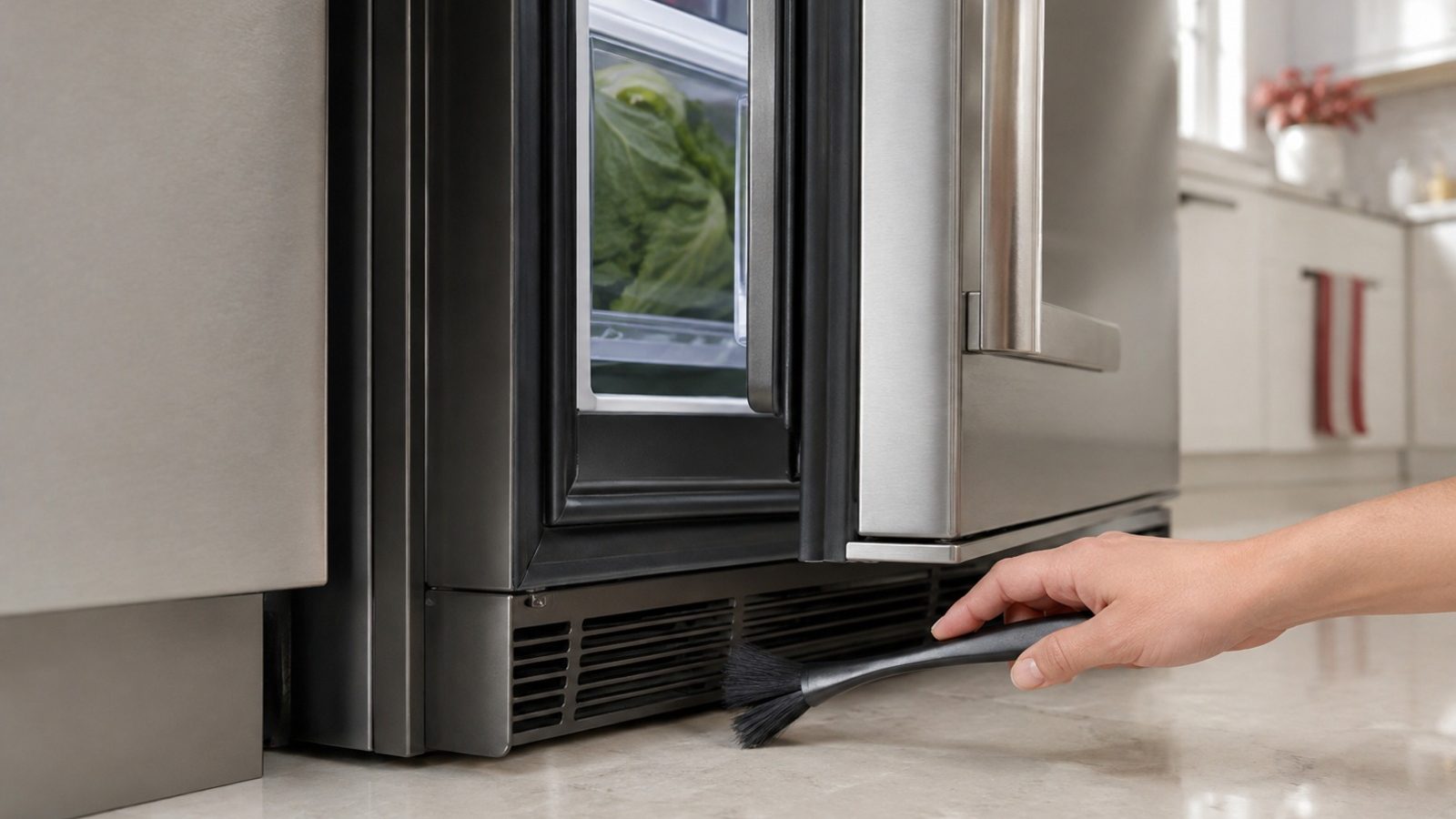

Clear airflow and clean door seals help a refrigerator run efficiently.
Refrigerator coil and seal care means keeping the door gaskets clean and flexible, the interior vents clear, and the area around the condenser free of loose dust. These steps help the cabinet hold its temperature without working harder. If the gaskets are torn or the unit is warm despite clean seals and open airflow, book a diagnosis rather than reaching behind covers.
Routine refrigerator care is easy to postpone until cooling slips, and by then a symptom cannot tell you which component is responsible. Collect observations that are safe, can be repeated and would be useful to a technician if you later set up a visit.
Simple upkeep and anything that needs testing or taking the unit apart are separate jobs. Do not circumvent a lock, a safety switch or an error message in order to keep the refrigerator running. Short notes made now let a later diagnosis go faster and land closer to the truth.
Wipe down the door gaskets, free the interior vents of stray food, and keep dust off the part of the condenser area you can reach. Perform each step with the refrigerator left where it normally sits, without prying at panels, fittings or controls. Should a simple change make a difference, let the unit run through a normal period before you reach a verdict.
The refrigerator has to work harder whenever warm room air slips past a grimy seal or when the airflow around the cabinet is cramped. Watch for whether the trouble is constant, tied to a certain load or setting, or only appears after a long run; that is more informative than restarting it repeatedly. Space around the cabinet counts as much as cleanliness, so keep the gaps the manual calls for at the sides and the top.
| Task | How often | Safe check |
|---|---|---|
| Wipe the seals | Once a month | Look for trapped crumbs |
| Clear the vents | Every week | Leave the air gaps open |
| Dust the reachable area | Each season | Use a soft brush |
The door gasket is the barrier that keeps room air out. When it is dirty, stiff, or damaged, warm humid air gets in, and the symptoms can be extra condensation, frost near the door, or a compressor that seems to run longer. The use-and-care guidance for some KitchenAid refrigerators lists an improper door seal as a cause of humidity and condensation.
The condenser coils release heat from the cooling system. Guidance for some models says routine coil cleaning is not typically needed in ordinary homes, while pets or a dusty environment make an occasional inspection worthwhile. Some models make the coil area technician-only, so the manual for your model decides whether this is an owner task at all.
Your use-and-care manual lists the controls, filter access and service intervals for the exact model, so refer to it. Clean just the parts it calls owner-serviceable, stay with the cleaners it names, and return each removable piece to the position it was built for.
Ahead of the next attempt, take away anything blocking the way, lighten an overstuffed load, and verify that airflow, water supply and door swing are unrestricted. Constant resets are worth avoiding, since they can disguise a fault that appears and disappears and may leave water, heat or pressure where it is unwelcome.
Reasonable to do yourself
Reserved for a technician
One check from KitchenAid guidance is to close a sheet of paper in the door and see whether it holds. Try it at several points around the door, because a seal can be good along the hinge and weak at a corner. Clean the gasket with mild soap and water and dry it, since food residue can keep it from sitting flat.
A seal that passes the paper test and is clean but still lets frost form points away from the gasket and toward airflow, door-closing alignment, or another cause that needs diagnosis. A gasket that is torn or hardened is a part to replace and not something to coat or glue.
If the gaskets are torn, or the unit is warm despite clean seals and open airflow, book a diagnosis. Do not reach behind covers.
If basic checks leave the symptom as it was, stop at the edge of owner-level work. Heating circuits, pumps, motors, refrigerant lines, gas connections, control boards and internal wiring require specialist test equipment and a technician able to verify that the repair is safe.
Get service booked soon if cooling continues to decline, a breaker trips, liquid collects near electrical parts, you smell something hot or burnt, a new grinding noise starts, or the unit can no longer complete a regular cycle. Keep the appliance off when it is giving a safety warning.
Pass along the model number, the specific symptom and when it first showed up, the settings that were active, and the outcome of your safe checks. A picture of a displayed code or a brief note on the sound adds value, but no cover should come off to get either.
Careful watching is not a repair, though it makes the best first step. Take care of the simple conditions, keep whatever error details turn up, and hand work on electrical parts, gas, the sealed system and internal mechanisms to a qualified technician.
Guidance for some models says routine cleaning is not typically needed in normal homes, with more frequent inspection where pets or dust are present. Your manual gives the interval and says whether the coils are accessible to owners.
A leaking gasket lets warm air in, which can raise the interior temperature, add condensation, and cause frost. It is one explanation among several, so check the seal, then airflow, before assuming a system problem.
Mild soap and water, then a dry cloth, is the guidance for some models. Avoid sharp tools and harsh chemicals that can damage the rubber.
Need help now? Visit our services page or contact us.
Official manuals and support notes are available on KitchenAid owner support.
Before you order a part, jot down the entire model number, as revised boards and sensors can alter which part number is correct.
A lone power reset can clear a temporary glitch, while a code that returns again and again generally means something physical is still wrong.
Between visits, keep vents and filters free of obstructions. Restricted airflow regularly looks like a failed sensor or electrical fault.
Water, a burning smell or sparks all mean you should stop using the appliance and arrange for a professional to inspect it.
Wipe the door gaskets, clear food from interior vents, and keep the accessible condenser area free of loose dust.
Only if there is no burning smell, smoke, sparking, gas odor, water near electricity, or other safety warning. Otherwise stop and arrange service.
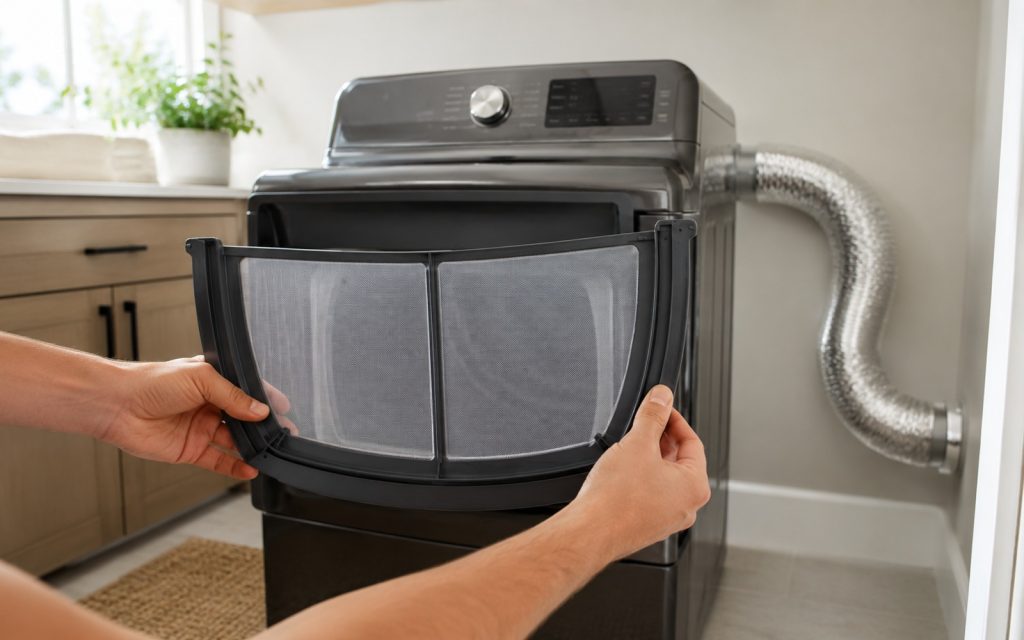
Clean venting improves drying performance and is an important home-safety habit.
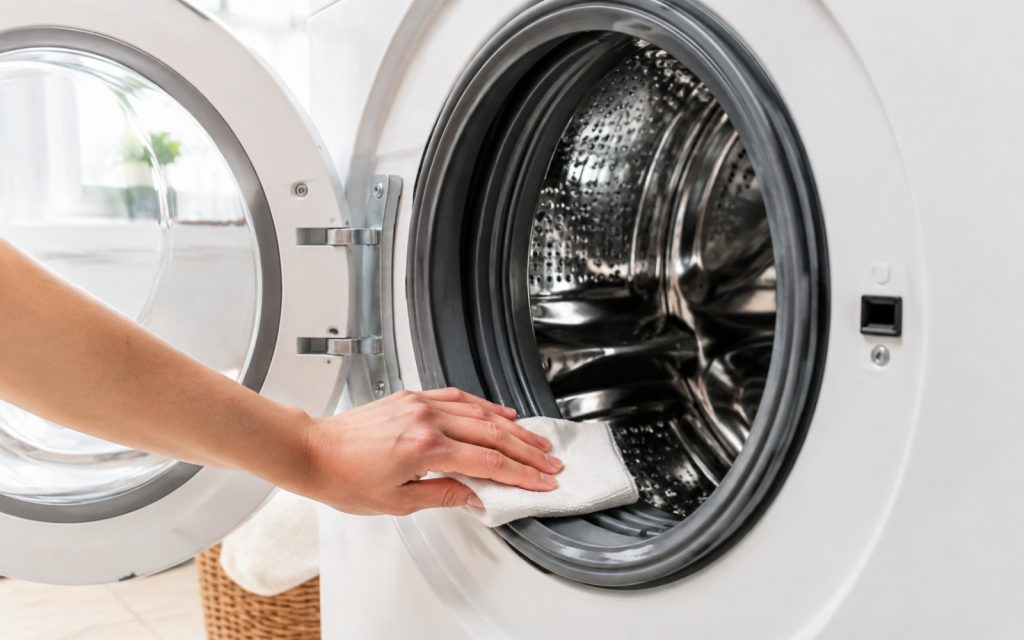
Simple gasket, drawer, and drum care helps prevent musty odors in front-load washers.
Mineral buildup is the most common cause of slow brewing and lost pressure — here is…
Share a few details and we’ll confirm an appointment. Prefer to talk? Call us and we’ll help right away.
Fields marked with * are required.